
Epoxy Garage Floors: A Sydney Homeowner’s Guide
Guide · 29 Sep 2026
An epoxy garage floor turns a dusty, stained slab into a clean, sealed surface you can hose out and actually enjoy using. This guide covers how it's done, what your options are, and what to look out for before you book anyone, including us.
What an epoxy garage floor actually is
"Epoxy floor" is a catch-all name. A proper garage system is several layers that each do a job:
- Preparation. The slab is diamond-ground to open up the surface, and cracks and chips are repaired.
- Primer and base coat. An epoxy primer soaks into the concrete, then a coloured base coat goes on top.
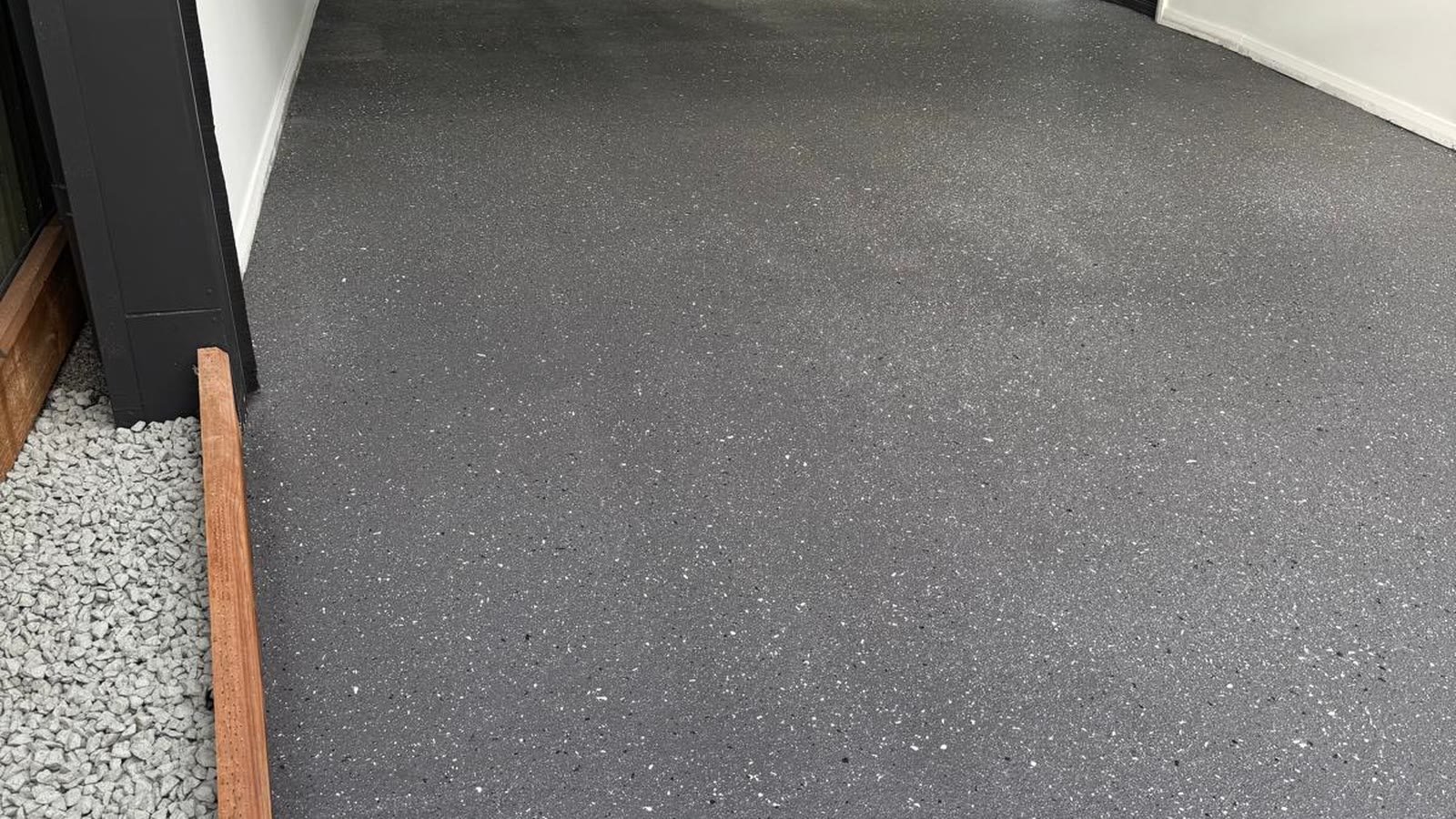
- Flake. Vinyl chips are broadcast across the wet base until it's fully covered. This gives the stone-like look and hides dust and marks.
- Topcoat. Clear coats seal the flake in. Our garages get two coats of polyaspartic, which handles UV and hot tyres better than a plain epoxy topcoat.
Finished, the system is about 1.2 to 1.8 mm thick. That's far thicker than a roll-on floor paint.
Flake or solid colour?
For a home garage, most people choose flake. It hides dust, tyre marks and small chips, it has a slight texture that helps grip, and it looks good for longer between cleans. A solid colour gives a sleek, modern look but shows every mark, and it's more common in workshops and commercial spaces. You can browse the options on our colour page.
How long does it take?
A typical double garage takes 2 to 3 days from grinding to topcoat. You can walk on it the same evening the topcoat goes down, but wait 72 hours before driving on it. Parking on a coating before it has fully cured can leave tyre marks that never come out.
How long does it last?
How long a floor lasts depends mostly on the preparation and the topcoat, not the brand on the tin. A floor that's ground, primed and sealed properly can last for many years of daily parking. Floors that fail early almost always went over concrete that wasn't ground, was damp, or still had an old sealer on it. That's why the preparation step matters more than anything else in a quote.
Can you epoxy a garage floor with cracks?
Yes, as long as the cracks are repaired first. Small cracks and chips are filled and ground flush during preparation. Wide or moving cracks can point to a slab problem, and we'll tell you honestly if the floor needs more than a coating.
Is it worth it?
For most homeowners, yes. A coated garage is easier to clean, doesn't create concrete dust, resists oil stains, and makes the space usable as a gym, workshop or storage area. It also looks far better when you sell. If you only use the garage for storage and never park in it, a cheaper sealer may be enough, and we'll tell you so.
What it costs
Epoxy flake garage floors start from $75 per square metre. A standard double garage of about 36 m² starts from around $2,700. The final price depends on the state of the slab and how much repair it needs. See our price guide for more detail.
Before you book anyone, ask
- Will the floor be diamond-ground, or just cleaned or acid-etched?
- How are cracks repaired, and how much is included?
- What's the topcoat, and how many coats?
- When can I drive on it?
Want a price for your garage? Send us a few photos and the rough size, or book a free on-site assessment.
Want a price for your floor?
Call 0470 347 292 or send us a few photos and we'll come back with a quote.
Free quote ↗More advice
- Concrete Resurfacing Cost in Sydney: Driveways, Paths & Pools
- Driveway Resurfacing: Is It Worth It? A Sydney Guide
- Pool Surround Resurfacing: Options, Colours & Costs
- Epoxy Flake vs Solid Colour: Which Floor Is Right for You?
- Can You Use Epoxy Outdoors? Why We Use Spray-Crete Outside
- Warehouse Line Marking: Planning Aisles, Walkways & Bays
- Bunnings Epoxy Kit vs a Professional Garage Floor
- Epoxy Flooring Cost in Sydney: 2026 Price Guide
- Is an Epoxy Garage Floor Slippery? What Actually Helps
- Can You Epoxy Over Tiles? What Has to Happen First
- What a Food-Safety Auditor Checks in Your Kitchen Floor
- Getting Accessible Bays Right to AS 2890.6
- Coating a Live Warehouse Without Stopping Work